
Adventures in Reading
Some of my favorite fashion writing from this year

Fashion Fiction Magazine is the digital companion to a regular, in-person reading series, which celebrates literary fashion writing from the past and present. Participants can read something they wrote, or something someone else wrote, it just has to have fashion and clothes as its starting point. These events usually sell out quickly, and are not recorded.
Here, you’ll have access to a sprawling library of literary fashion writing, and will be the first to know about upcoming events.
Hi,
I hope that if you’re reading this, your holiday parties and work are winding down for the year, and you’re getting ready for the cozy part of the holiday season. I personally have spent the week with the flu rewatching Downton Abbey, and I’m excited to keep hunkering down for the foreseeable future. I bought some J.Crew pyjamas embroidered with my initials in sort of a red wine fugue state on Thanksgiving, so I feel very prepared.
Fashion Fiction’s first year has been such an exciting one! I was so happy to host three readings, with over 200 people (plus even more waitlisters!), and 18 amazing readers. To celebrate the end of the year, I wanted to share some of my favorite fashion writing that I came across in my personal reading this year.
I hope you enjoy it! Thank you so much if you came to a reading this year, or even just considered it!! I so appreciate it, and can’t wait for more next year!
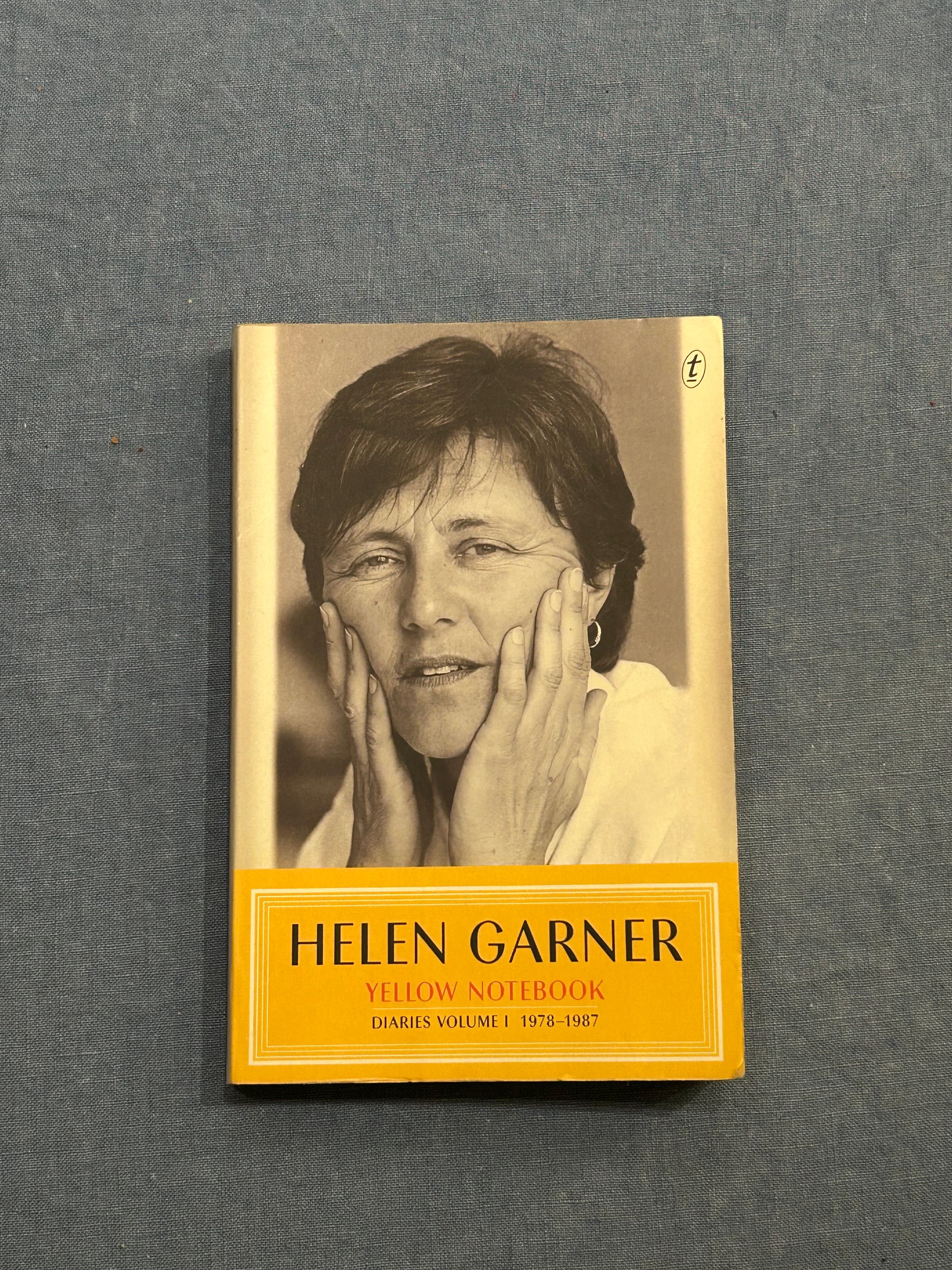
Yellow Notebook: Diaries Volume One, 1978-1986 by Helen Garner
I bought this on a trip home from my favorite bookstore in Sydney, the Potts Point Bookshop. I can’t recommend Helen Garner’s diaries enough. She writes a surprising amount about clothes in them. At one point she reflects on the small, interior world of the novel she’s working on (the novel would become her near perfect book, The Children’s Bach), which perfecly describes how I feel about her writing about clothes, and writing about clothes generally: “The day I realised my novel was going to be a short one, and that its domestic subject and setting were quite proper, I walked home from work and passed a print shop, in the window of which stood a copy of that van Gogh painting of the inside of his bedroom: floorboards, a bed, two cane-bottomed chairs, a window. I thought, That’s a beautiful painting. And it’s only the inside of a room.”
“Cure for homesickness and ennui: walk. I must have walked ten kilometres yesterday. Bought two jumpers and a pair of red shoes, which are perfect.”
“A girl waiting for the lights in Bourke Street last Tuesday. A perfect example of how I would like to look: not her face, but her way of dressing: practical, comfortable, colourful, not fashionable. Straight black skirt just below the knees, a mauve-ish jumper, red stockings, brown flat shoes, green gloves, and a little red knapsack on her back. She looked terrific. M teased me for turning back, again and again, open-mouthed, to stare after her.”
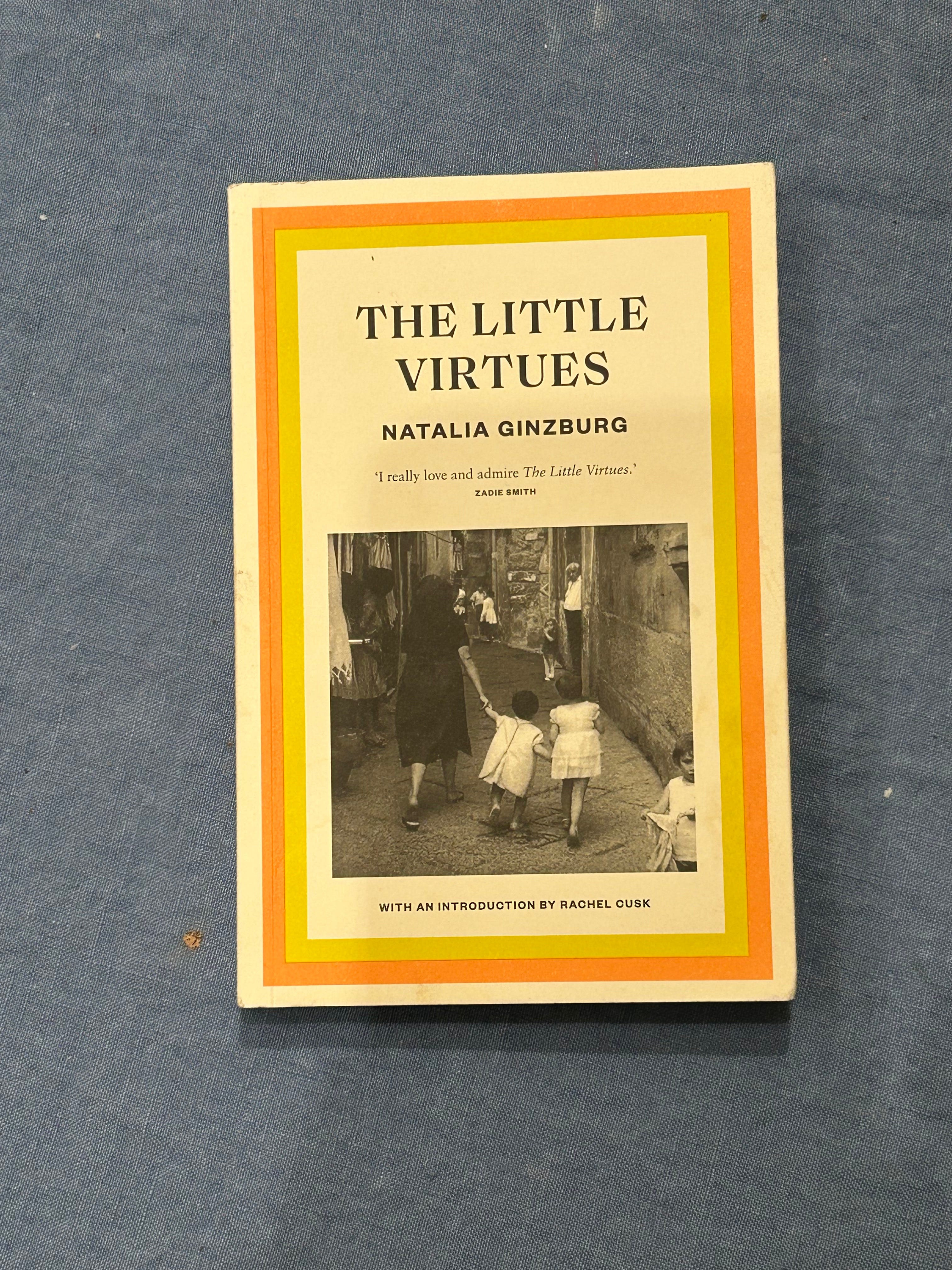
The Little Virtues by Natalia Ginzburg (1962)
I bought a copy of The Little Virtues at Hatchards in London. Daunt Books has been reissuing Ginzburg’s work, and I really like the new covers. I read it on the train from London to Paris a few days later, very early in the morning in late June. I was glad to be travelling with my parents and boyfriend, because Ginzburg's writing about her family and husband in these essays is so beautiful and so devastating. The sections below are from the essay ‘Worn Out Shoes’, which is about her time post-war, living in Rome while her children lived with her mother. The fact that clothes are often synonymous with desire sometimes earns them a frivolous designation, but to desire something is, of course, to imagine something new, or to hope for more, which is not frivolous at all.
My shoes are worn out, and the friend I live with at the moment also has worn-out shoes. When we are together we often talk about shoes. If I talk about the time when I shall be an old, famous writer, she immediately asks me ‘What shoes will you wear?’ Then I say I shall have shoes made of green suede with a big gold buckle on one side.
I belong to a family in which everyone has sound, solid shoes. My mother possessed so many pairs of shoes that she even had to have a little wardrobe made especially for them. Whenever I visit them they utter cries of indignation and sorrow at the sight of my shoes. But I know that it is possible to live even with worn-out shoes.
During the German occupation I was alone here in Rome, and I only had one pair of shoes. If I had taken them to the cobbler’s I would have had to stay in bed for two or three days, and in my situation that was impossible. So I continued to wear them and when - on top of everything else - it rained, I felt them gradually falling apart, becoming soft and shapeless, and I felt the coldness of the pavement beneath the soles of my feet. This is why I still wear worn-out shoes, because I remember that particular pair and compared with them my present shoes don’t seem too bad; besides, if I have money I would rather spend it on something else as shoes don’t seem to me to be very essential things. When I was young I was always surrounded by tender, solicitous affection and I was spoilt, but that year when I was here in Rome I was alone for the first time and this is why I like Rome so much - even though it is full of history for me, full of terrible memories and very few hours of happiness. My friend also has worn-out shoes, and this is why we get on well together. My friend has no one to reproach her about the shoes she wears, she has only a brother who lives in the country and goes around in hunting boots.
She and I know what happens when it rains, and your bare legs get soaked and the water comes into your shoes, so that there is a slight sound — a kind of soft squelch — at every step.
So, my children live with my mother and so far they do not have worn-out shoes. But what kind of men will they be? I mean, what kind of shoes will they have when they are men? What road will they choose to walk down? Will they decide to give up everything that is pleasant but not necessary, or will they affirm that everything is necessary, and that men have the right to wear sound, solid shoes on their feet?
Because our shared life will not last much longer; soon I shall leave and return to my mother and children and be in a house where no one is allowed to have worn-out shoes. My mother will take me in hand; she will stop me using pins instead of buttons and writing till the small hours. And, in my turn, I shall take my children in hand and overcome the temptation to let my life go to pieces.
I shall become serious and motherly, as always happens when I am with them, a different person from the one I am now - a person my friend does not know at all.
I shall watch the clock and keep track of time, I shall be cautious and wary about everything and I shall take care that my children’s feet are always warm and dry, as I know that they must be if it is at all possible - at least during infancy. And perhaps even for learning to walk in worn-out shoes, it is as well to have dry, warm feet when we are children.
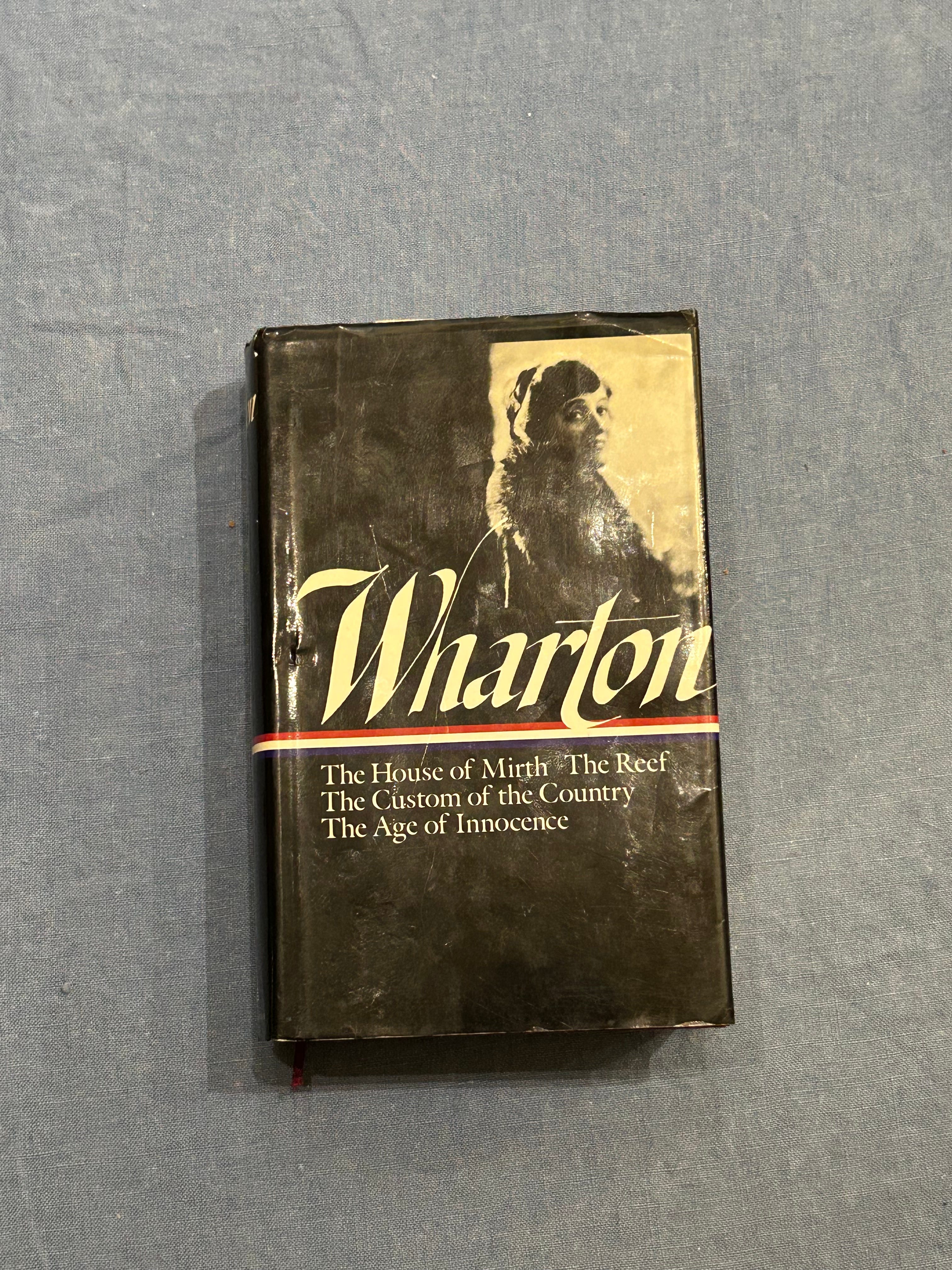
The Age of Innocence by Edith Wharton (1920)
I am reading this right now! I have about 100 pages left, and I am trying to finish it before I get on a plane tomorrow! I read a lot of books that I should have read forever ago, and for whatever reason, I haven’t. The way Edith Wharton writes about clothes is so delicious.
“What are you two plotting together, aunt Medora?” Madame Olenska cried as she came into the room.
She was dressed as if for a ball. Everything about her shimmered and glimmered softly, as if her dress had been woven out of candle-beams; and she carried her head high, like a pretty woman challenging a roomful of rivals.
In my youth,” Miss Jackson re-joined,“it was considered vulgar to dress in the newest fashions; and Amy Sillerton has always told me that in Boston the rule was to put away one’s Paris dresses for two years. Old Mrs. Baxter Pennilow, who did everything handsomely, used to import twelve a year, two velvet, two satin, two silk, and the other six of poplin and the finest cashmere. It was a standing order, and as she was ill for two years before she died they found forty-eight Worth dresses that had never been taken out of tissue paper; and when the girls left off their mourning they were able to wear the first lot at the Symphony concerts without looking in advance of the fashion.”
“Ah, well, Boston is more conservative than New York; but I always think it’s a safe rule for a lady to lay aside her French dresses for one season,” Mrs. Archer conceded.
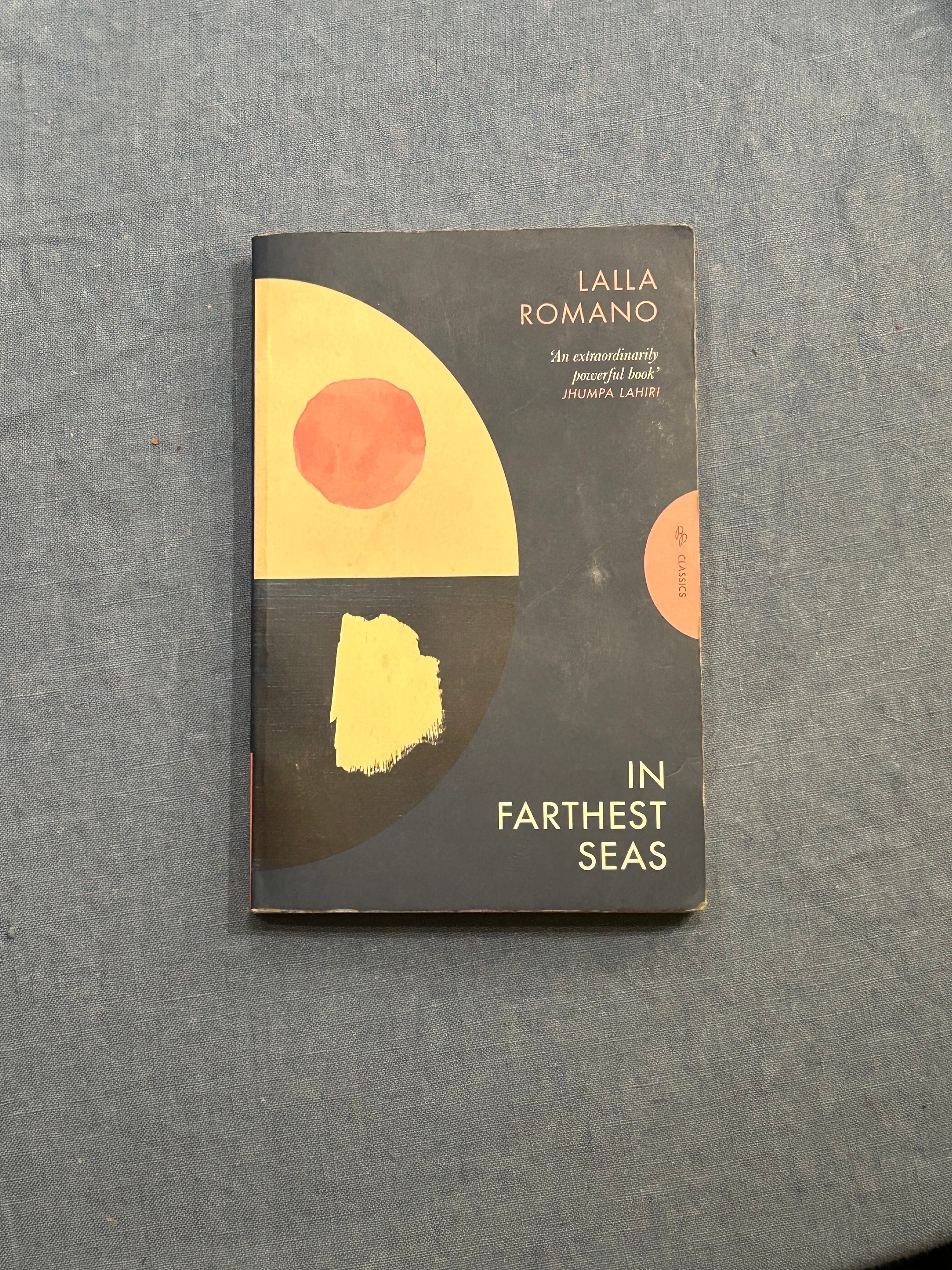
In Farthest Seas by Lalla Romano (first published in 1987, translated in 2025 by Brian Robert Moore).
In Farthest Seas is so beautiful and so sad. Lalla Romano wrote it after the death of her husband, and it recounts their first four years together, and their final four months. The passages below are from the first four months, I love how vivid her descriptions of clothing are; like the fragments of a dream that you remember when you wake up.
There sleeps, encircled by dreaming woods,
a far-off citybegan an unwritten poem.
I was near another village that was still under the shadow of the Bisalta, Cuneo’s mountain; it wasn’t really a road so much as a stony mule track. On my way back, the descent kept growing steeper and steeper, and I kept rolling faster down; the brakes had stopped working. At a sharp turn I became frightened, and I suddenly decided to throw myself to the ground. I don’t know if he was the one to lift me up; I know that he was standing there, and I, panting, leaned against his chest – sturdy but not stiff, warm and at the same time fresh. I could feel his heart beating.
The next month in Paris I had a big round bruise on my arm. My dark red dress was made of silk voile, very low cut, with drooping points at the bottom and shoulders. The dress matched the colour of my bruise. I was at the Café de Paris with Lionello Venturi; the tall and gallant violinist came over to ask me what I wanted to hear, and I suggested Veracini’s Largo (a musical choice that had to do with Boves).
The day was grey, and it was windy and raining up there; on the way back, we came running down off the paths. I was wearing an elegant dress – for him, I imagine. I had bought it in Turin (a ‘steal’ suggested by Aunt Carola). It was long and smooth, black, made of very heavy and soft silk; it resembled women’s dresses in fourteenth-century frescos. It was worn with a paper-thin, turquoise-coloured scarf knotted around the neck. While I ran, the scarf slipped off, and the wind carried it away. We looked for it among the bushes and the rocks, uselessly. Since clothes managed to interest me almost exclusively as emblems, I was saddened by the loss of that veil.
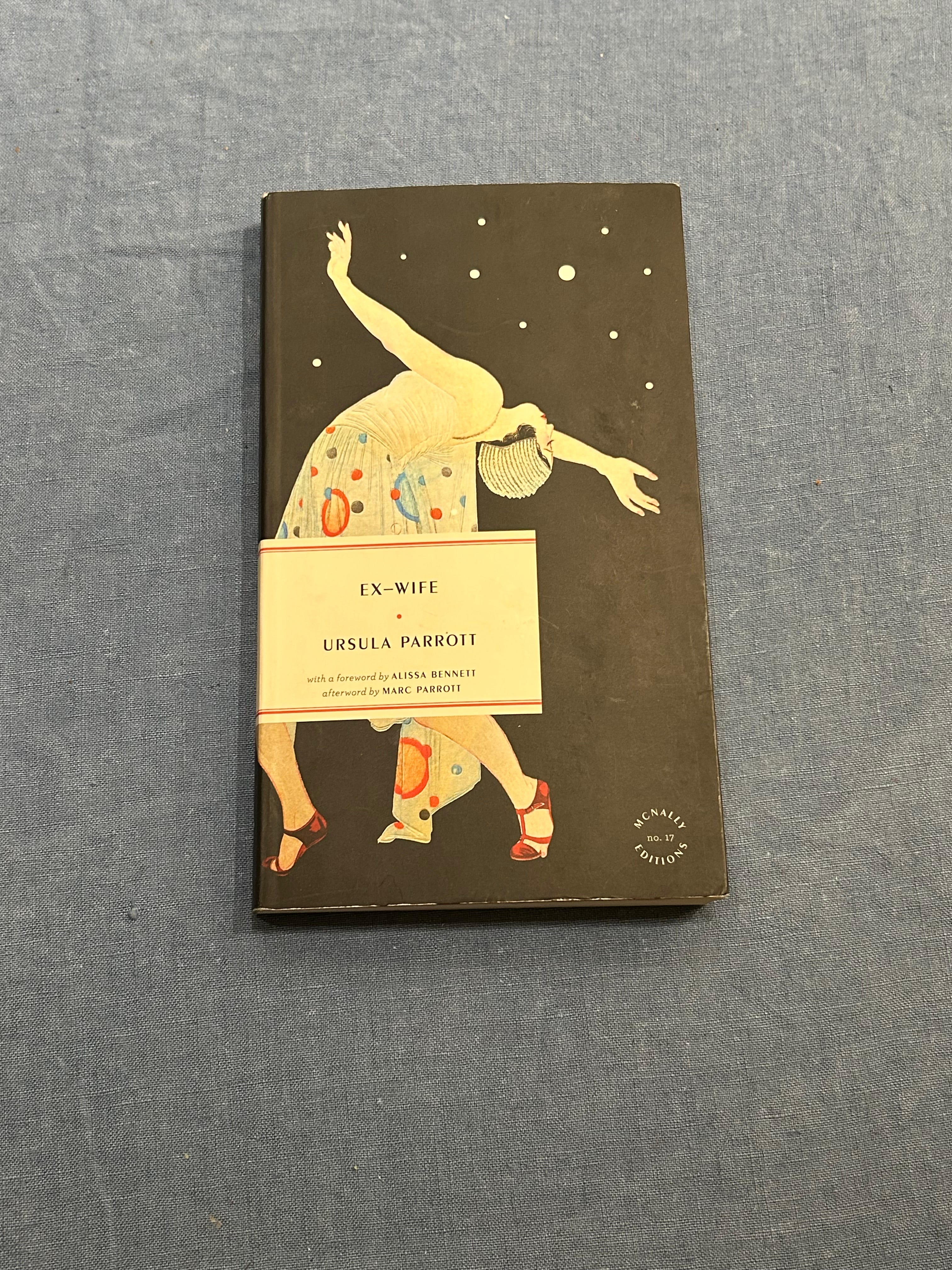
Ex-Wife by Ursula Parrott (originally published 1929, reissued 2023)
This was another book that I put off reading forever, and then finally got to it this year and loved!! I wrote about it a little bit for The Pleasure Lists, and there’s so much amazing fashion writing in it, but I particularly loved the section below.
I went upstairs to change my dress. And thought, not for the first time, that vanity is so great a blessing to women that it should be listed among the major virtues. Recollection that the last time Noel ever saw me, 1 was wearing a bright red dress from Paris, with a hat that matched it precisely, and a brand-new grey Krimmer coat, would be some comfort to me, always. That might be absurd. It was none the less profoundly true.